Budburst season in Rutherglen's old vineyards
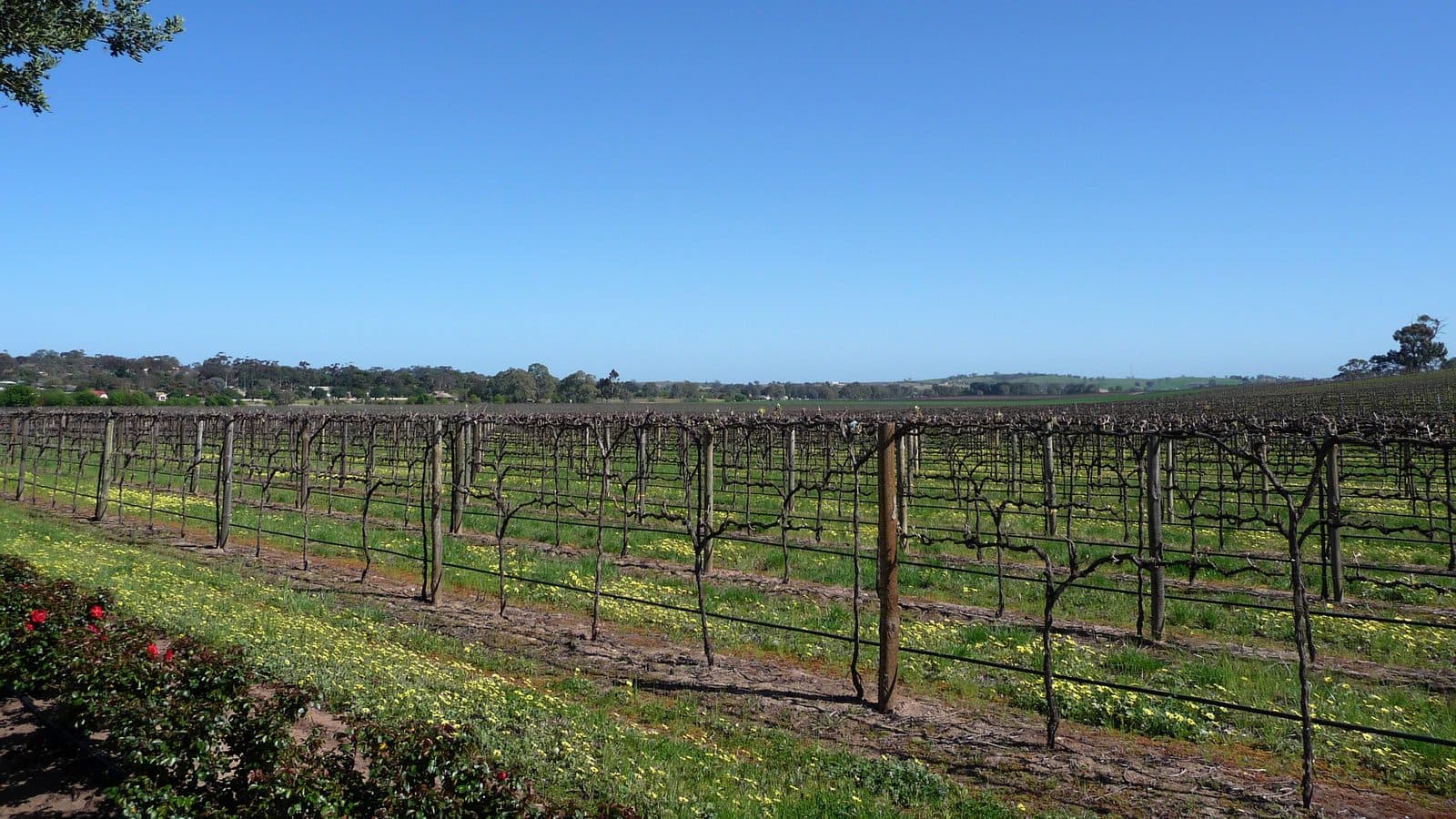
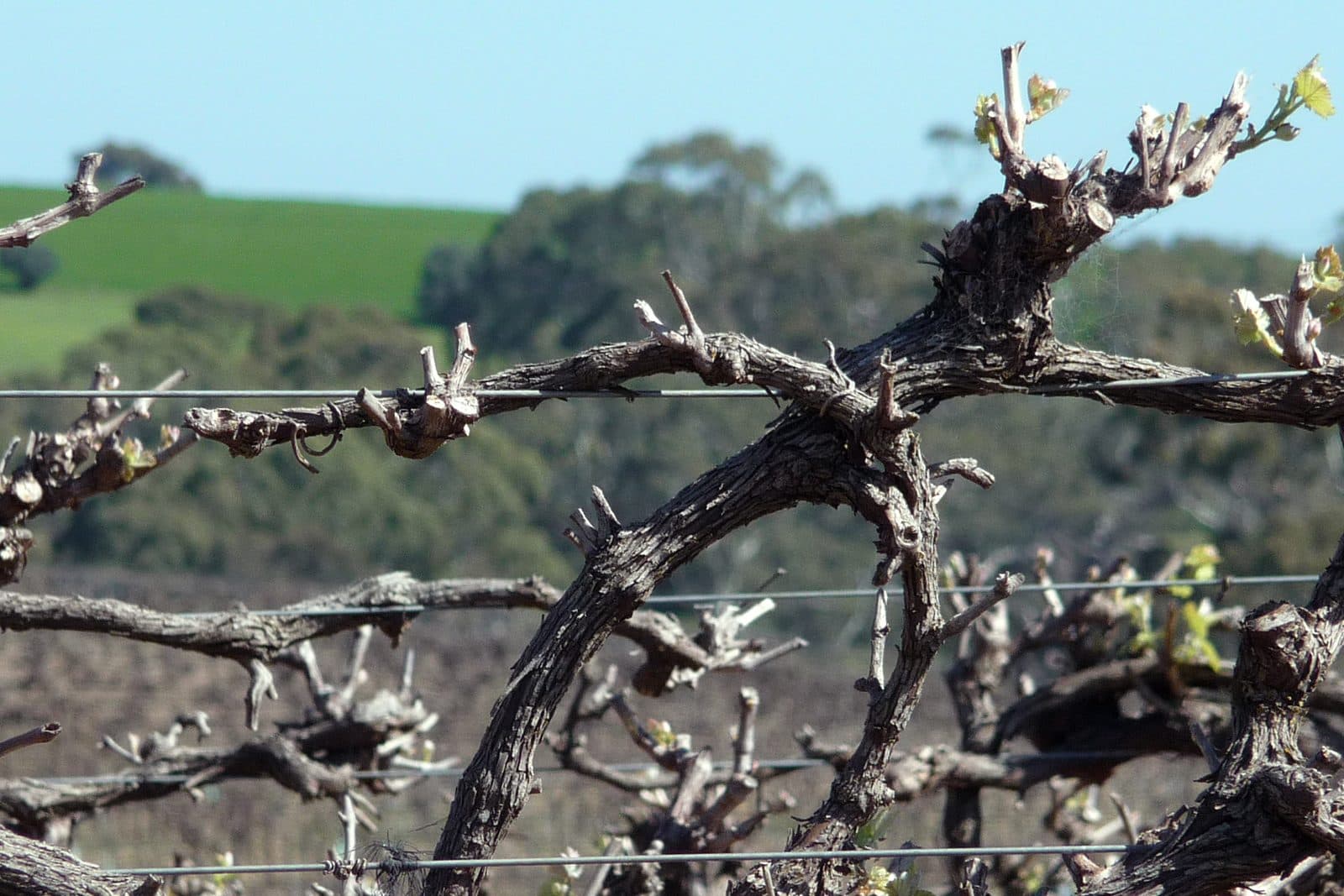
Drive out toward Rutherglen any morning just now and the vineyards still look asleep. Bare wood strung out along the wires, row after row of it running back to the tree line, nothing to say the season has turned. Look closer at the tip of a cane and there is a small green thing pushing out through the bud where a fortnight ago there was nothing at all. The vines are waking up before most of the district has noticed, and the wine country all around Chiltern runs on that one small event.
What is actually happening in the bud
The bud itself was set last summer, a tiny embryonic shoot packed away inside a hard scale and left to sit through the whole winter. Nothing about it is new growth reacting to spring. It is old growth, waiting, and what wakes it is accumulated warmth rather than any single mild day. Once the vine has had enough of it, the bud swells, the scale splits, and the first small leaves push out on stored reserves alone, because the roots have not properly started working yet. For the first few weeks the vine is living off last year's savings.
A season with an order to it
It does not happen to the whole vineyard at once. Whites go first, chardonnay reliably among the earliest of anything in the ground, then the reds follow over the weeks after, and last of all the fortified varieties that give Rutherglen its name break bud. The order barely changes from year to year even when the season is early or late, so a grower walking the rows can more or less tell which block is which by the calendar alone, before a single grape is showing.
The frost that comes right behind it
A shoot a few days old has no defence at all against a hard frost, and it is carrying next year's entire crop on it. Overnight temperatures matter more to a grower right now than at almost any other point in the calendar, and growers who can afford to watch for it run one of two things on a bad night. A wind machine mixes the cold air pooling at ground level with the warmer layer sitting a little way above it, which only works if that warmer layer is actually there to draw on. Failing that, overhead sprinklers run water over the buds all night so it freezes on the surface, and the freezing itself gives off just enough heat to hold the plant tissue at the one temperature it needs to survive. Both are a way of buying a few degrees on a night when a few degrees is the whole difference.
Gold, then grapes, then a name change
The vines went in not long after the gold did. Rutherglen's rush brought people and money into the district through the 1850s, and it was not long before some of that money went into the ground as vineyard rather than a claim. Chambers Rosewood dates to 1858, Gehrig to 1859, St Leonards the year after that, and several more of the district's oldest wineries followed within a couple of decades. By the 1880s Rutherglen was already one of the larger wine districts in the country, on the strength of thirty years' growth from a standing start.
Then in 1899 phylloxera turned up in a Rutherglen vineyard, and the district spent the next twenty years pulling out and burning vines it could not save. What went back into the ground was grafted onto American rootstock resistant to the insect, which is most of what is still out there today, and production did not climb back to its old levels until 1925. The dry red market had gone to South Australia in the meantime, so Rutherglen leaned the other way, into the rich fortified wines the district still makes its name on.
Even the names have had to keep up. What Rutherglen sold for a century as Tokay could not go on being called that once Australia signed a wine trade agreement with Europe in 2010, and after a ten-year transition to clear old stock and settle on something else, the last of it went out under the new name, Topaque, from 1 September 2020. The wine in the bottle had not changed. The label had simply run out of road.
Further east, up in the King Valley, the vines break bud on the same rough calendar in country that could hardly look more different: higher, cooler, and settled by Italian families who came in after the war to grow tobacco before the next generation turned the same paddocks over to wine. Otto Dal Zotto planted King Valley's first prosecco vines in 1999, cuttings sourced through a fellow immigrant from his own home town, and the valley has been known for it since.
None of it happens quickly, and none of it happens for an audience. A vine does not know there is a district named after the town nearby, or that a bottle of what it grows once had a different name on the label. It only knows the accumulated warmth is enough now, and gets on with it. If you are heading out toward Rutherglen to have a look this week, call in on the way through. We open at seven and the loaves are out early, and there is a fair drive still ahead of you either way.
Thank you for reading.
More from the Journal

Tomatoes by Cup Day: Spring Planting Around Chiltern
Plenty of Victorian gardeners still wait for Melbourne Cup Day to plant their tomatoes. Around Chiltern the reason is frost, and the rule bends a little.
Read
Lake Anderson, the Gold Mine That Became Chiltern's Lake
Nobody dug Lake Anderson as a lake. It is what was left when the ground over an old gold mine sank, and the town has made good use of it since.
Read
Orchid Season in Chiltern's Ironbark Forest
For a few weeks each spring the forest floor outside town does something the rest of the year gives no warning of, and most of it is orchids.
Read