Henry Handel Richardson and the house by the lake
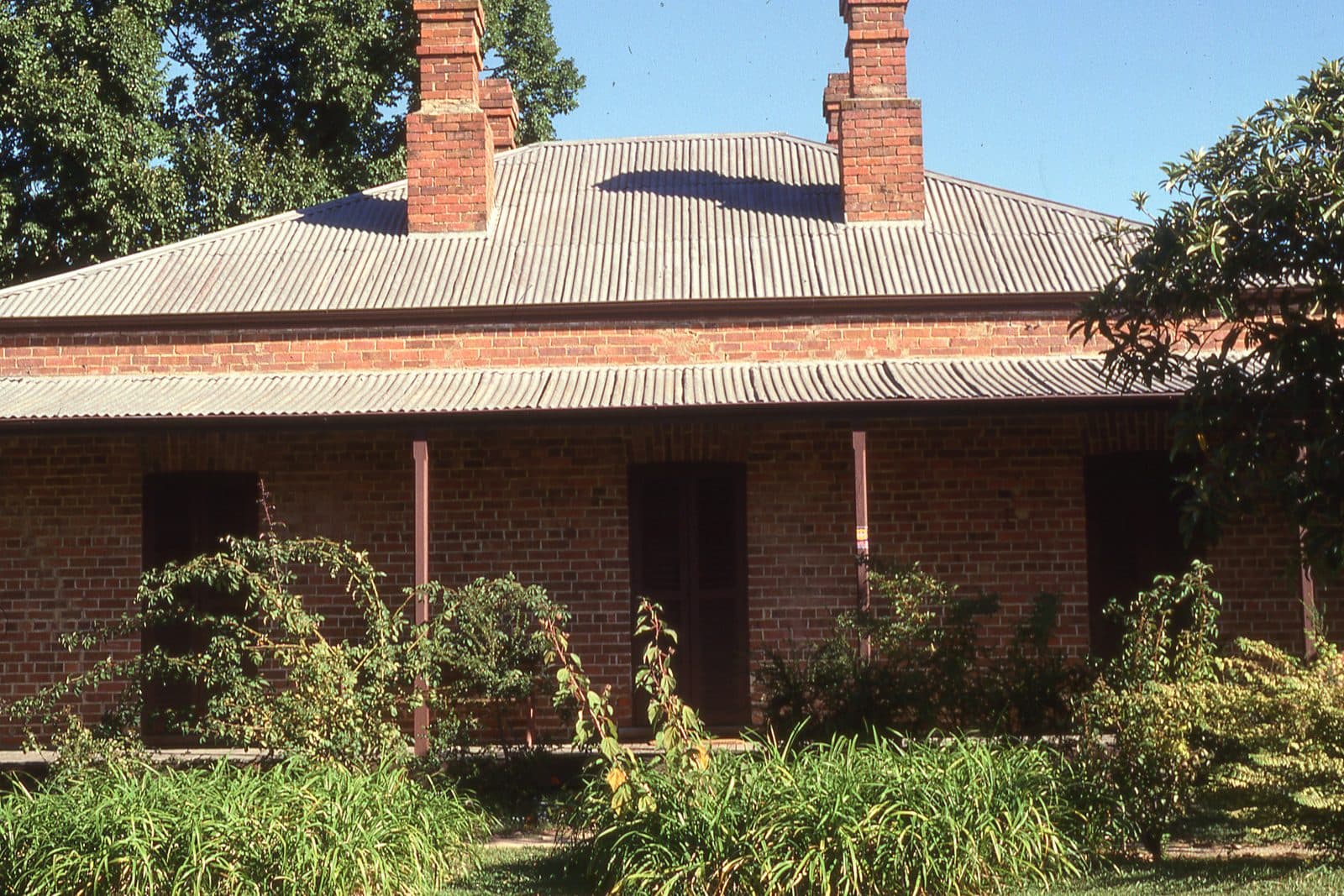
Victoria Street runs quiet on a weekday morning, a short walk from Conness Street, past a handful of old houses to a low brick homestead behind a garden gone a little wild with roses. Most people driving through Chiltern have never heard of the girl who once lived there. She grew up to write one of the finest novels this country has produced, under a name that was not her own, and for a year and a half of her childhood, this was home.
A doctor's family, eighteen months in a country town
Ethel Florence Richardson arrived in Chiltern in July 1876, brought by her father Walter Lindesay Richardson, a doctor who had taken up work in the district. She was six years old. The family stayed about eighteen months before moving on, one posting among several as her father's work carried them from town to town across Victoria. It was a short stay by any measure, shorter than most people spend somewhere before it counts as home.
Her father died a few years later, when Ethel was nine, and the family's circumstances changed with it. She went on to study music in Melbourne and Leipzig, married a scholar named John George Robertson, and settled in Europe for the rest of her life. She wrote her novels under a man's name, Henry Handel Richardson, and it is that name on the spine of every edition, in every library catalogue, on the exam papers of generations of Australian students who never knew Ethel Richardson had lived here at all.
Barambogie
Her most celebrated book, The Fortunes of Richard Mahony, drew heavily on her own childhood, and Chiltern appears in it thinly disguised as the fictional town of Barambogie. Readers who know both the novel and the district have spent decades working out which street is which. The house she grew up in made it into the book in one form or another, and so, in its way, did the water beside it. Wikipedia records the detail that still gets a laugh from locals: when the Richardsons lived there, it was a swamp, not a lake, at all. The lake came later, or the name came early. Either way it stuck, and the National Trust still calls the house Lake View.
The girl who left before nine
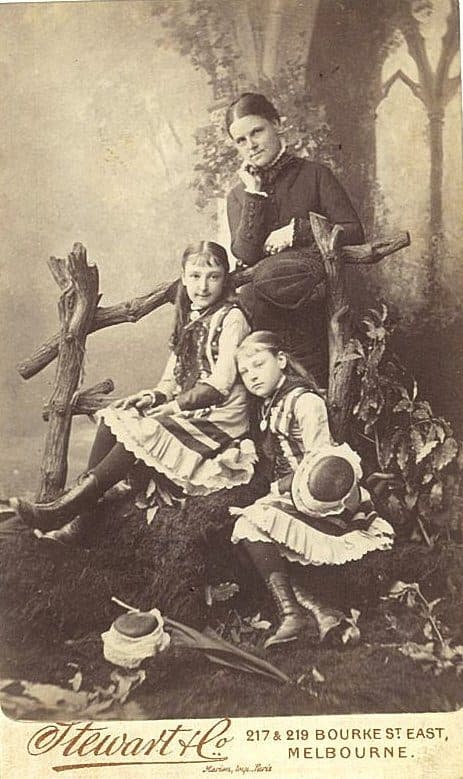
This photograph was taken not long after the family left Chiltern, Ethel with her mother Mary and her sister Lily. Within a few years her father would be gone and the family's fortunes would turn again, the very subject that gave her masterwork its title.
The house that stayed
Lake View still stands on Victoria Street, a plain brick homestead built in 1870, its verandah and hipped roof much as they would have looked when the Richardsons arrived. The National Trust has owned it for decades and opens it to visitors on Fridays and Saturdays. Inside, among the furniture and family pieces, is the desk Ethel wrote her first novel on: proof, if anyone needed it, that a country childhood cut short can still turn into something lasting.
Every third of January, the Trust and the Henry Handel Richardson Society mark her birthday at the house itself, with talks from the property's caretakers and visitors travelling up from Melbourne for the day. Earlier this year her old typewriter went out on loan to the State Library of Victoria for an exhibition, a small object that has outlasted the woman who used it by eighty years.
None of this is far from the bakery. Walk down past the shops of a morning, past the war memorial and the old bank, and Victoria Street is only a few minutes further, the homestead sitting back from the road behind its garden the way it always has. Have a look at it on your way through, then come warm up with something from the oven. We open at seven, and the bread is always out early.
Thank you for reading.
More from the Journal

Tomatoes by Cup Day: Spring Planting Around Chiltern
Plenty of Victorian gardeners still wait for Melbourne Cup Day to plant their tomatoes. Around Chiltern the reason is frost, and the rule bends a little.
Read
Lake Anderson, the Gold Mine That Became Chiltern's Lake
Nobody dug Lake Anderson as a lake. It is what was left when the ground over an old gold mine sank, and the town has made good use of it since.
Read
Orchid Season in Chiltern's Ironbark Forest
For a few weeks each spring the forest floor outside town does something the rest of the year gives no warning of, and most of it is orchids.
Read