Remembrance Day and Chiltern's memorial gates
November comes in quietly around Chiltern. Cup Day takes the first Tuesday, and after that the month settles into longer evenings and the first of the warm weather.
A week and a day after the Cup comes Remembrance Day, on Wednesday 11 November. Chiltern's own memorial is on Conness Street, and it is an easy thing to walk past without noticing.
The memorial gates on Conness Street
The Chiltern War Memorial Gates stand at the entrance to a small memorial park on Conness Street. The Victorian Heritage Database describes two stuccoed masonry pillars inscribed with the words Lest We Forget, holding plaques for 53 district servicemen who died in the First and Second World Wars. Between them hang a pair of wrought iron gates in a pattern that was popular at the time, and the fence either side is concrete posts and wire mesh of the same age.
A photograph on the Australian War Memorial's Places of Pride register carries the plain caption that the gates are a symbolic entrance only. The heritage listing calls the gardens a reminder of the devastating losses suffered by many country towns, and a focus for commemorative events.
There is a second set of memorial gates in town, at the primary school. These are low wrought iron gates in a brick wall, with a timber sign between the posts that reads 1939 memorial Gates 1945. They went up after the Second World War for former pupils who served and died in it.
Why Remembrance Day stops at eleven
At 11 am on 11 November 1918 the guns on the Western Front fell silent after more than four years of continuous warfare.
The Memorial explains that the eleventh hour of the eleventh day of the eleventh month soon took on a meaning of its own, and the allied nations chose that moment to remember their dead. On the first anniversary, at the new Cenotaph in London in 1919, two minutes' silence was kept as part of the ceremony. The idea had come from Edward Honey, an Australian journalist working in Fleet Street.
It was called Armistice Day until after the Second World War, when the Australian and British governments changed the name so the day would cover all the war dead. In 1997 the Governor-General, Sir William Deane, proclaimed 11 November as Remembrance Day and urged Australians to keep one minute's silence at 11 am each year.
Where the red poppies come from
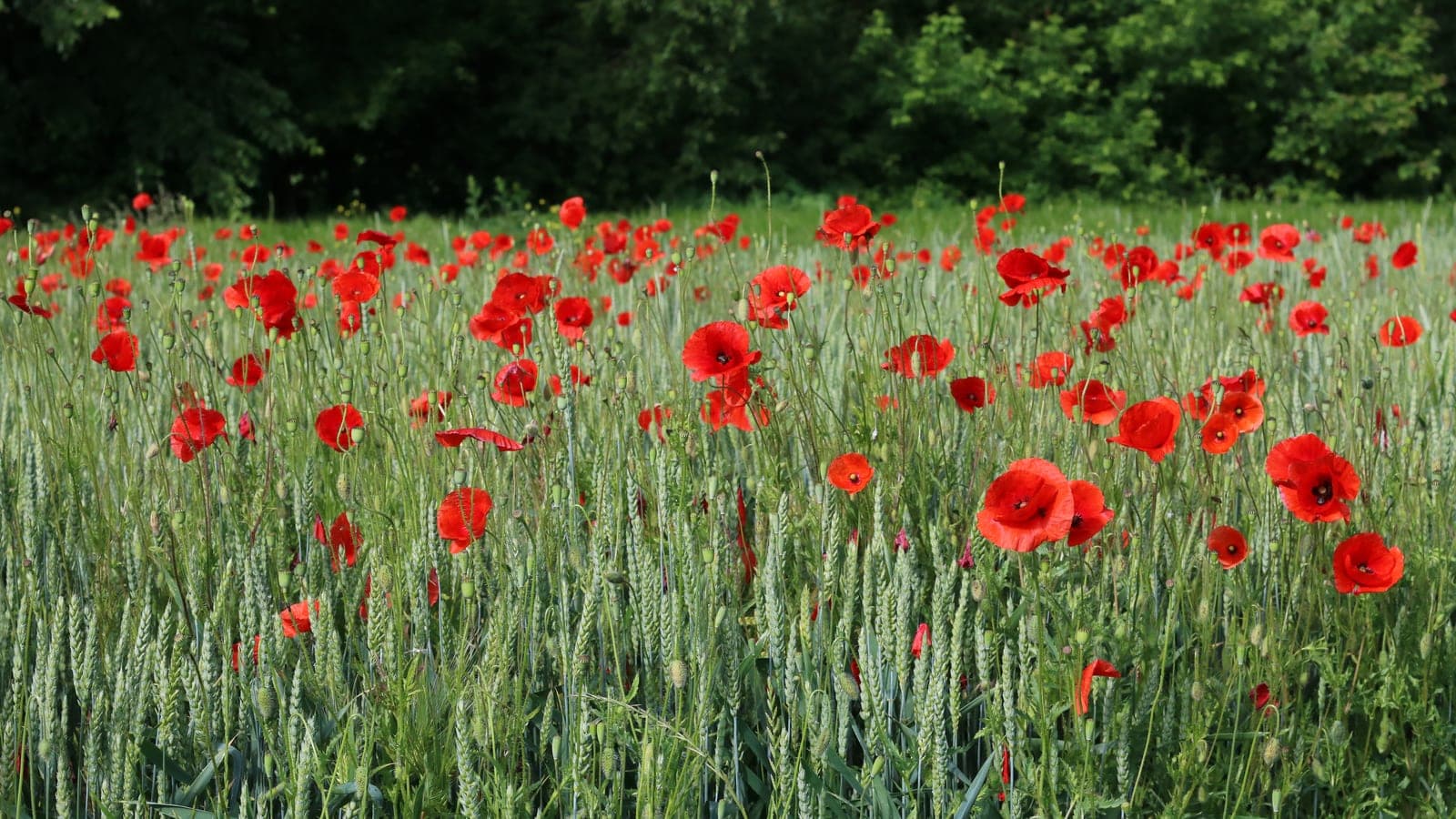
The poppy belongs to the day because of the Western Front. The Memorial notes that red poppies were among the first plants to grow in the torn-up battlefields of northern France and Belgium, and that the sight of them at Ypres in 1915 moved Lieutenant Colonel John McCrae to write In Flanders Fields.
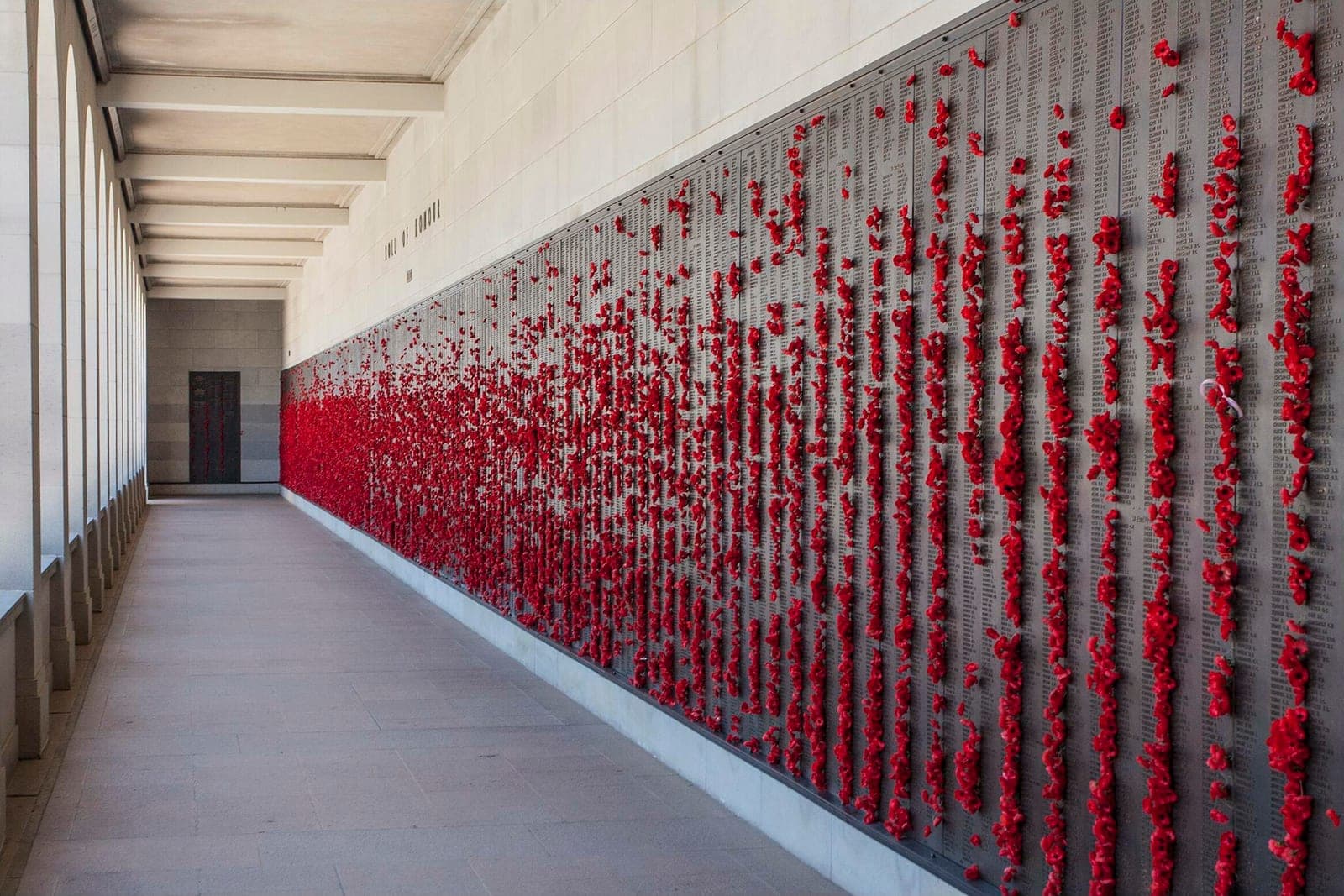
The Returned Soldiers and Sailors Imperial League, which came before the RSL, first brought poppies out for Armistice Day in 1921, a million of them in silk, made in French orphanages. In Canberra people now tuck a poppy into the bronze panels of the Roll of Honour beside a particular name. That began on 11 November 1993, the day the Unknown Australian Soldier was laid in the Memorial's Hall of Memory.
The names at the Athenaeum
The plaques on the gates give a number. For the faces, the Chiltern Athenaeum at 57 Conness Street, the 1866 brick building that was once the town hall and library, keeps the district's First World War honour roll alongside photographs of the soldiers on it. The museum is run by volunteers, and the full list of names is on its website.
This year eleven o'clock falls in the middle of an ordinary Wednesday morning, with the shops open and the school in session.
We are on Conness Street as well, and the ovens are on well before we open at seven. If you walk down to the gates that week, call in on the way past for a pie or a loaf to take home.
Thank you for reading.
More from the Journal
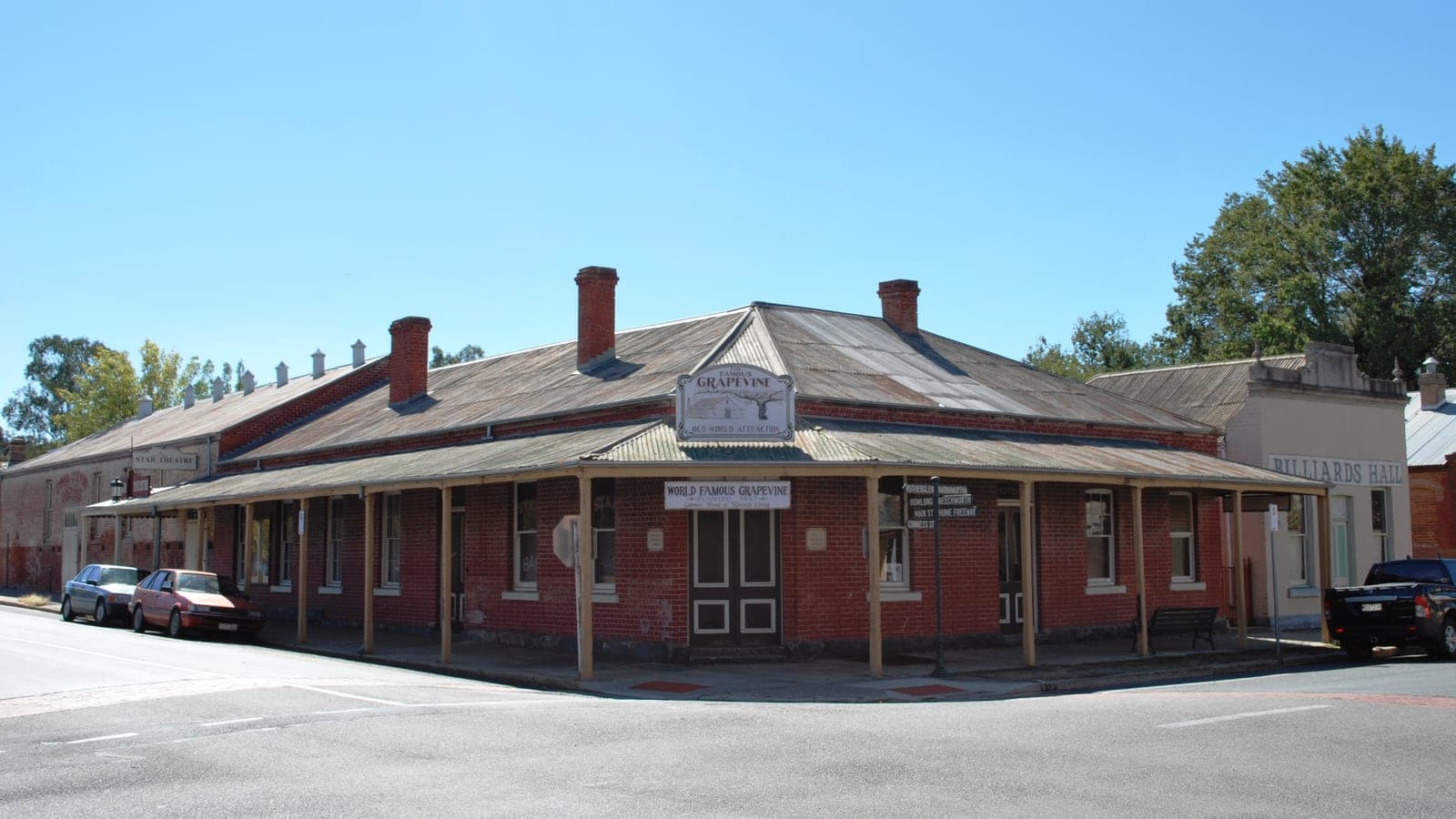
Chiltern's 1867 grapevine at the old Star Hotel
On the corner of Main and Conness streets, a vine planted in 1867 is in leaf again. A short history of the Chiltern grapevine and the hotel it grows behind.
Read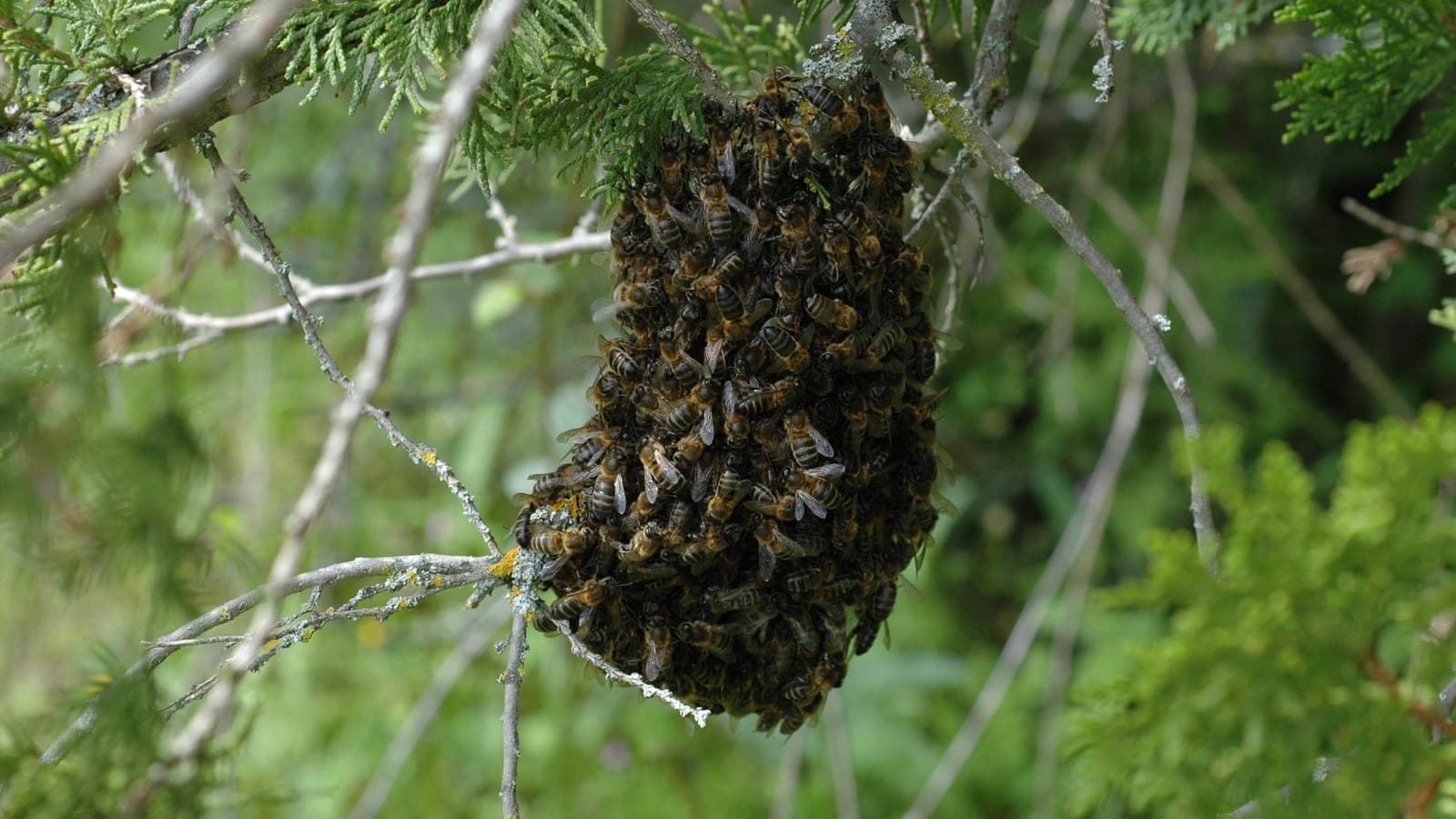
Swarm Season Around Chiltern, and the Bee Sting Cake
Spring is swarm season around Chiltern. What a cluster of bees on a branch is doing, what to do if one settles in your yard, and where the bee sting cake got its name.
Read
Tomatoes by Cup Day: Spring Planting Around Chiltern
Plenty of Victorian gardeners still wait for Melbourne Cup Day to plant their tomatoes. Around Chiltern the reason is frost, and the rule bends a little.
Read