When the golden wattle comes out around Chiltern
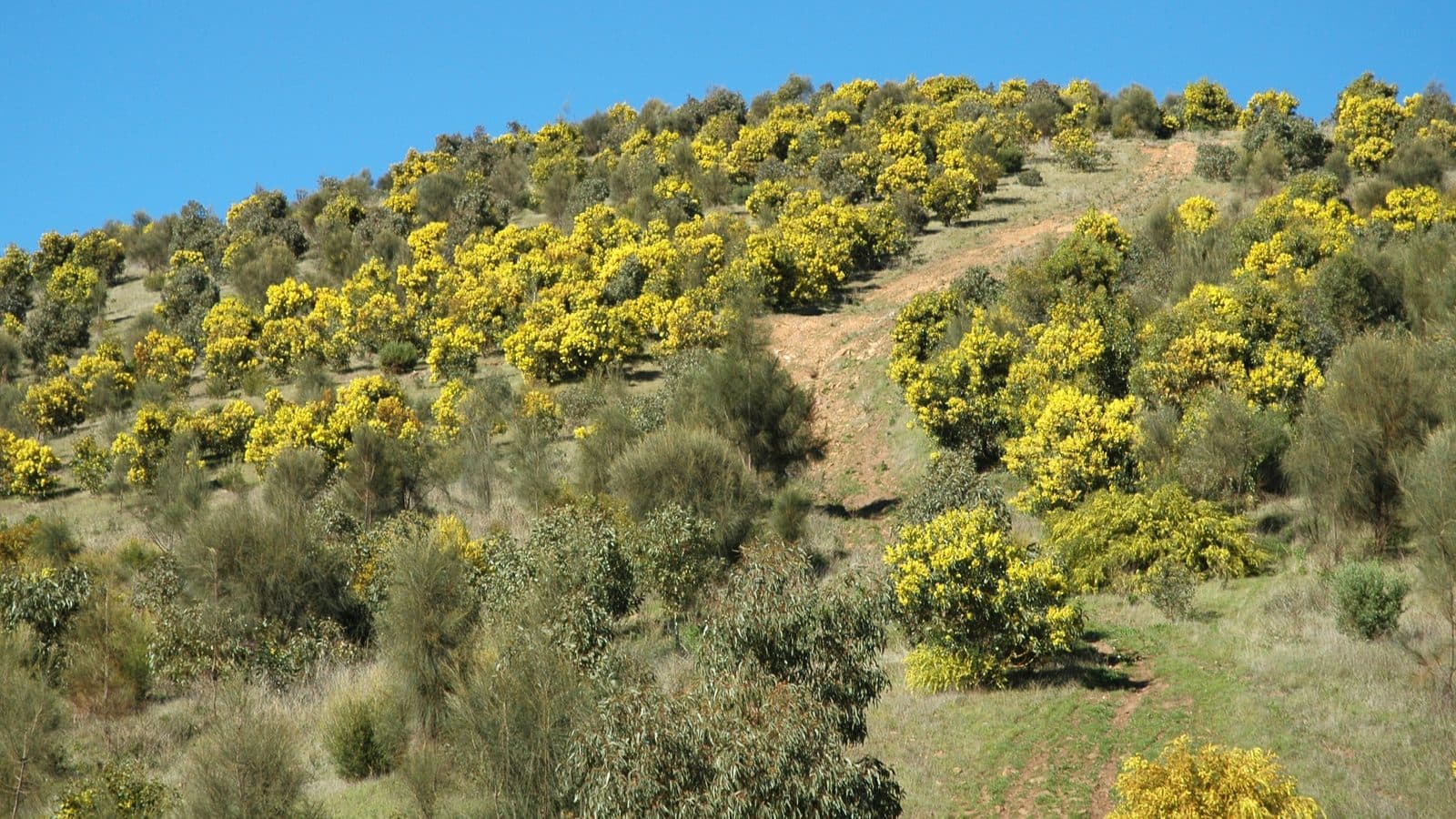
The wattle gets going before anything else does. Some time in the back half of winter, while the mornings are still hard and the trees along Conness Street are still bare, a yellow comes into the scrub on the roads north and south of town. One bush on a cutting, then a run of them, then a whole hillside gone the colour of egg yolk. Nobody put them there. Wattle takes the poor ground that other things leave alone, the gravel banks and the road edges and the thin dry soil out under the box and ironbark, and every year it is the first thing in the district to say the winter has a limit.
What the golden wattle is doing out here
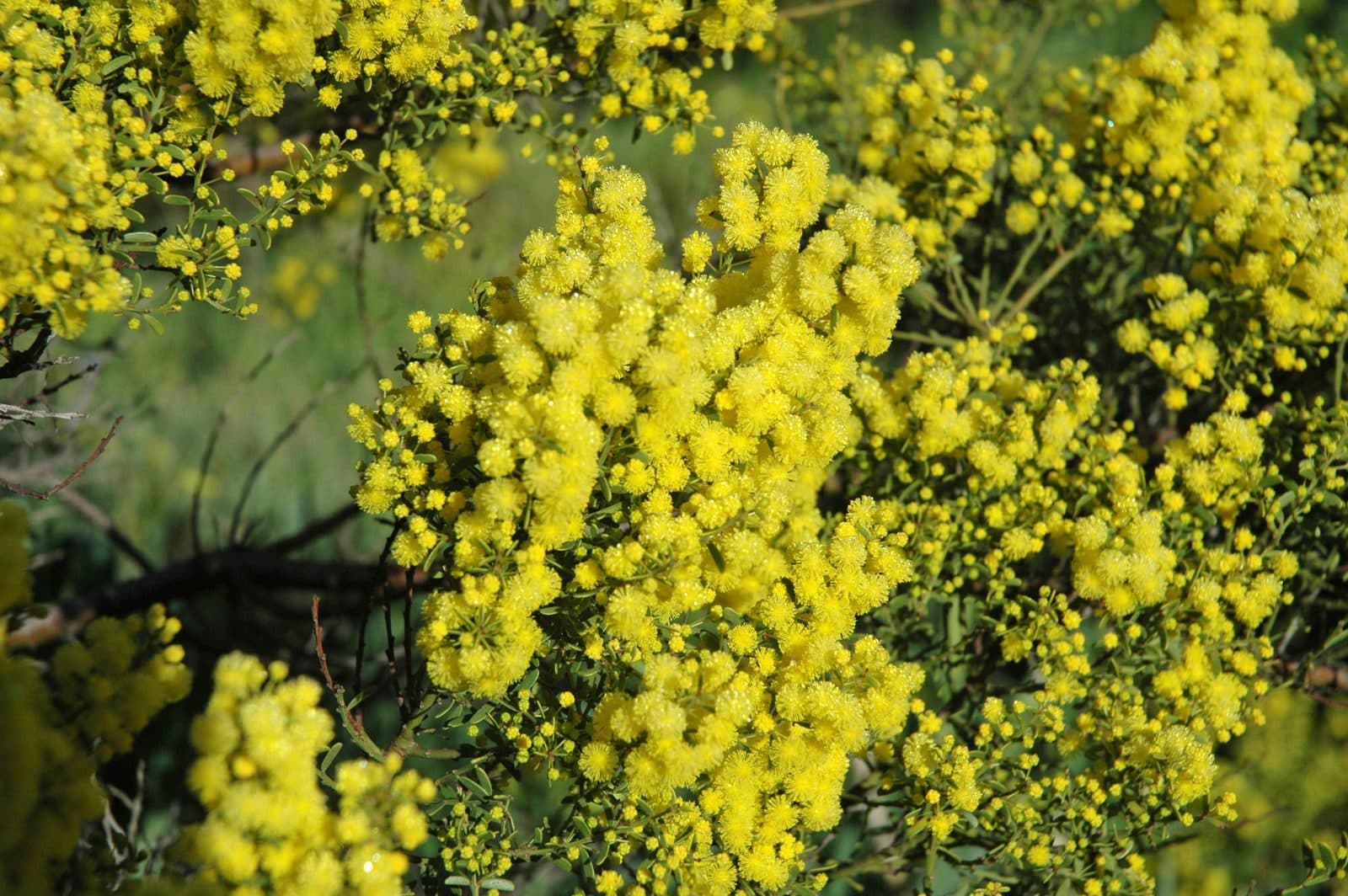
The golden wattle is Acacia pycnantha, the one on the coat of arms and the one most people mean when they say wattle. It grows through South Australia, Victoria, New South Wales and the ACT, in the understorey of open eucalypt forest on dry, shallow soils, which is a careful way of describing a good deal of the ground between here and Beechworth. It comes into flower in late August and holds through September. A tall shrub or a small tree, eight metres at the most, and not a long life either, twelve or fifteen years and then it goes over and another one comes up behind it.
It has no leaves at all. What look like leaves are phyllodes, flattened leaf stalks that took over the job, hanging down in long curved blades. Look closely at a flower and it is not one flower. Each of those little golden balls is a cluster of forty to eighty small flowers packed in together, and on a still morning a stand of them carries a scent that you notice before you work out where it is coming from.
The forest it belongs to
The Chiltern-Mt Pilot National Park runs from the low hills west of Chiltern across to Beechworth, a little over twenty-one thousand hectares of box-ironbark forest: red stringybark, Blakely's red gum, grey box and mugga ironbark, with more than six hundred native plants underneath them. Wattle is understorey country. It sits below the canopy on the dry rises, and once it has finished the orchids and the lilies and the bush peas come along behind it through the spring.
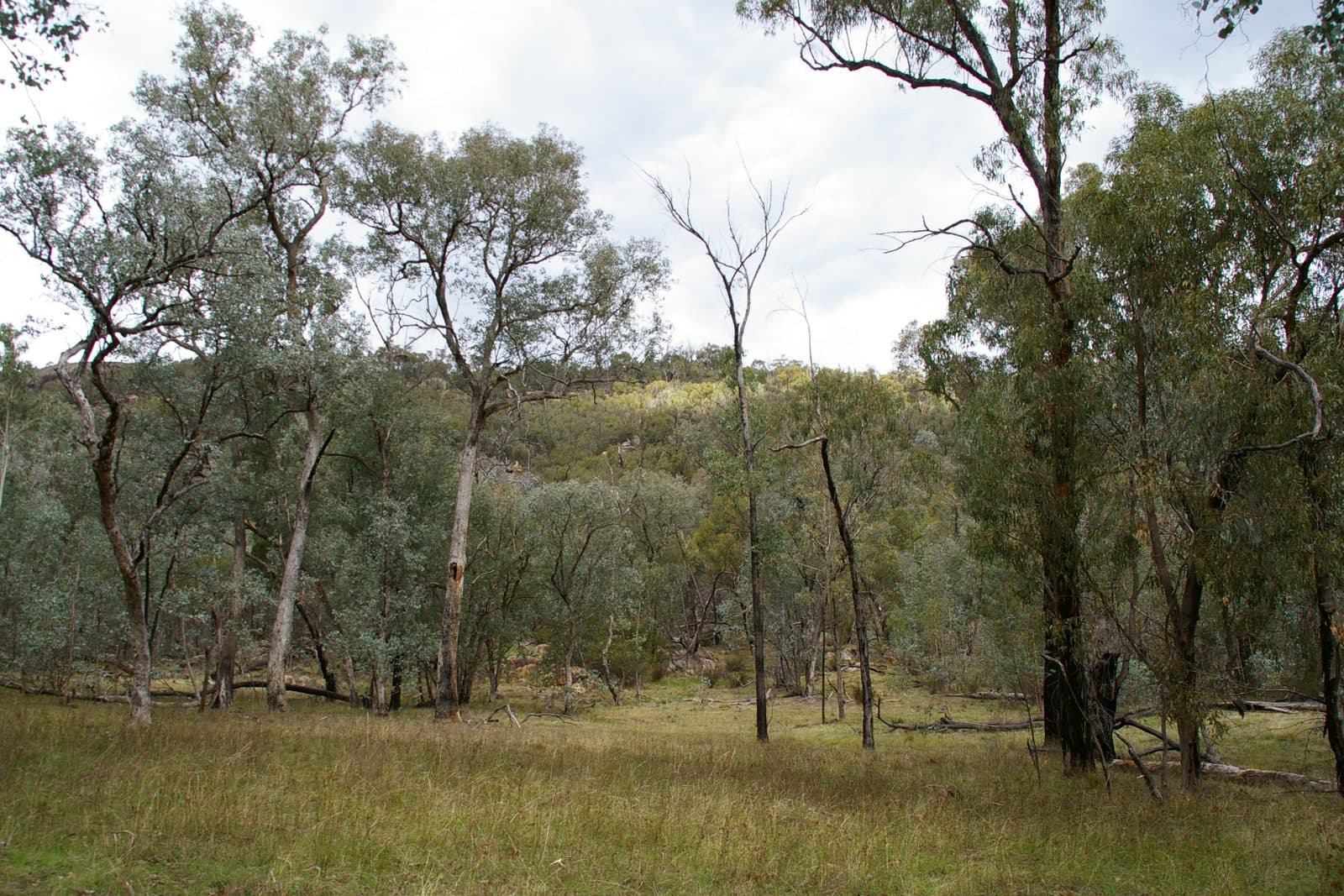
That forest is also why the birds come. Over two hundred species use the park, among them the regent honeyeater and the swift parrot, both of them rare enough now that people drive a long way on the chance of one. Kangaroos graze the clearings late in the day. If you walk in there in the last weeks of winter you will have the wattle out over your head and very little else about.
The first day of September
Wattle has been carrying meaning in this country for a long time. On 1 September 1910, New South Wales, Victoria and South Australia held the first Wattle Day across the state borders, and through the First World War the day turned to patriotism and to raising money for the war effort, a sprig of yellow worn on the coat and posted off to men a long way from home. The habit came and went for most of the century after that.
The official dates are more recent than you would think. The golden wattle was proclaimed Australia's floral emblem on 19 August 1988 by the Governor-General, Sir Ninian Stephen. National Wattle Day, on the first of September, was proclaimed in 1992. The date was not chosen for a battle or a signature. It was chosen because that is when the wattle is out.
The years when wattle was work
There was a long stretch when wattle was a trade rather than a sight. From about the time of the gold rush in the 1850s, men went into the bush to strip bark for its tannin, mostly black wattle, and the work was done in the warm months when the sap ran and the bark came away. It killed the tree. The bark was bundled and dried and crushed, then steeped in pits to brew a liquor that tanned hides for leather. Whole teams lived on it, some of them farmers clearing their own ground, some of them itinerant men working the state forests. The trade held on until about 1960, when the chemical tanning agents finished it.
The forest out here was worked in much the same spirit. Gold first, from the middle of the century, with the alluvial and reef mining and the quartz and the gravel. Timber from the 1930s. Firewood cutting carried on until 2002, when the national park was declared and the sound of it stopped. Walk the tracks now and you can still read the old disturbance in the ground, and the wattle grows through all of it without any particular opinion on the matter.
Wattle season is short. It gets everyone's attention for a few weeks and then the phyllodes close over it again and you would hardly know it had happened. If you are heading out that way on a cold morning, call in on the road through. We open at seven and the loaves are out early, and there is nothing wrong with eating half of one in the car with the heater going and a hillside of wattle out the window.
Thank you for reading.
More from the Journal

Tomatoes by Cup Day: Spring Planting Around Chiltern
Plenty of Victorian gardeners still wait for Melbourne Cup Day to plant their tomatoes. Around Chiltern the reason is frost, and the rule bends a little.
Read
Lake Anderson, the Gold Mine That Became Chiltern's Lake
Nobody dug Lake Anderson as a lake. It is what was left when the ground over an old gold mine sank, and the town has made good use of it since.
Read
Orchid Season in Chiltern's Ironbark Forest
For a few weeks each spring the forest floor outside town does something the rest of the year gives no warning of, and most of it is orchids.
Read